I Asked AI to Audit My Computer. Why Was I the Bottleneck?
During one week in June 2026, my independent store had 1,353 visitors. Orders: 0.
I was confused. This computer had 55 scheduled jobs running on it. They wrote articles, submitted pages for indexing, watched rankings, and produced daily reports. Every job showed green. The machine was busy. My wallet was not moving.
This is a six-minute case study about one blunt way to check whether automation is pointed in the wrong direction. I asked AI to inspect my projects, scripts, scheduled jobs, and logs. It gave me three conclusions: my automation was aimed wrong, I was the bottleneck, and one folder was taking almost 10 GB.
The numbers from that week
The funnel looked like this:
- 1,353 visitors arrived at the site.
- 200 people viewed a product page.
- 1 person added an item to the cart.
- 0 people placed an order.
Traffic was up 54% from the week before. Almost all of that increase came from blog readers. The product pages remained quiet.
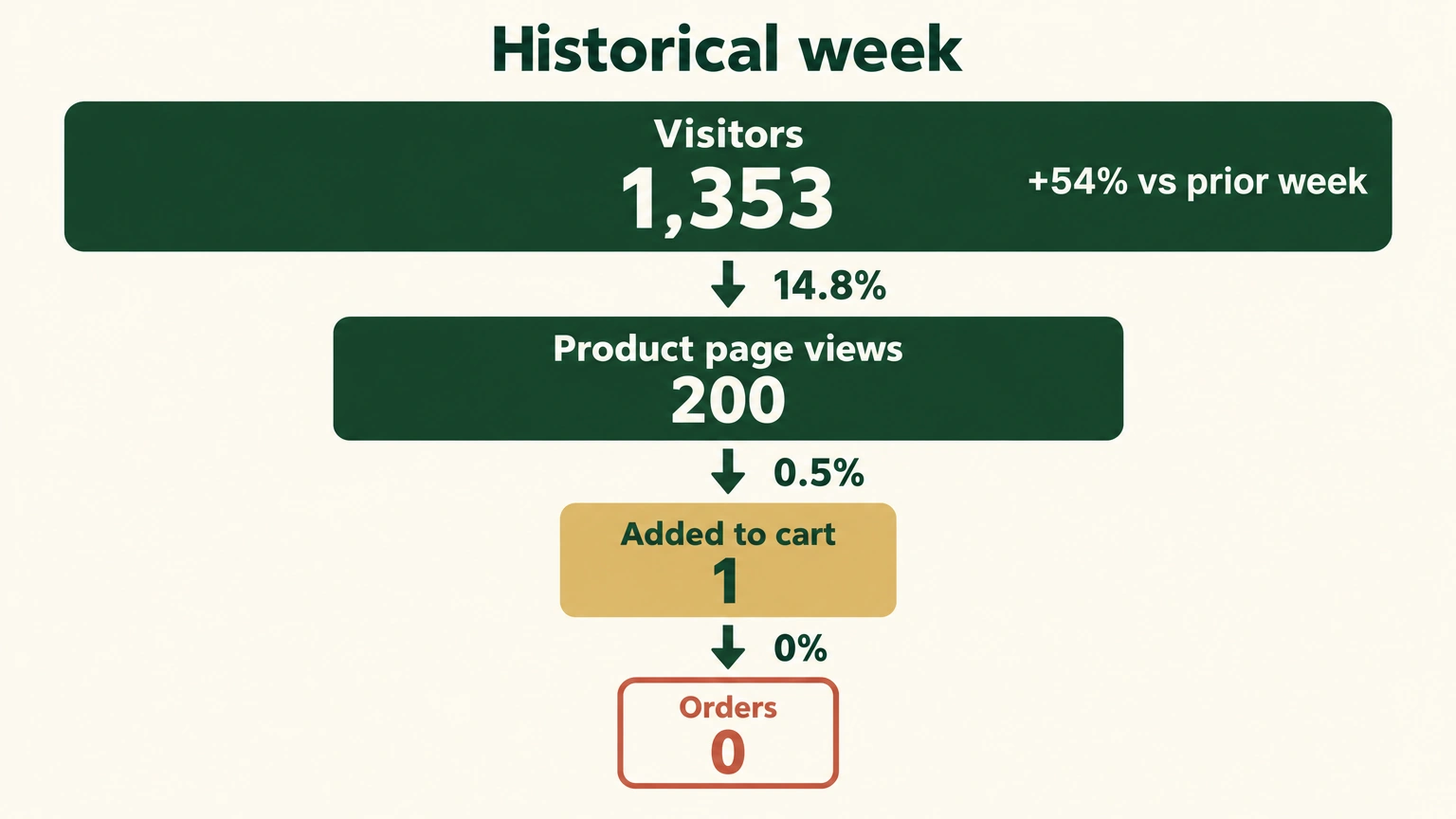
Historical week only. The arrows show where the funnel narrowed; they do not describe current store performance.
I asked AI to audit the whole computer
I had a simple thought: instead of guessing, I would ask AI to inspect every project, script, scheduled job, and log, then write an audit report.
It spent more than an hour on the review and produced several hundred lines. I expected a list of scripts to patch. The first finding stopped me instead:
Number of jobs, out of 55, directly related to conversion: 0.
I checked the list. I had jobs for content, SEO, data monitoring, and even stock research. I had nothing looking at why the 200 people who saw a product did not buy.
It was like automating every part of a restaurant kitchen while half the menu had fallen off the front door. The prep, cooking, and washing all ran. Visitors still walked in, looked around, and left.
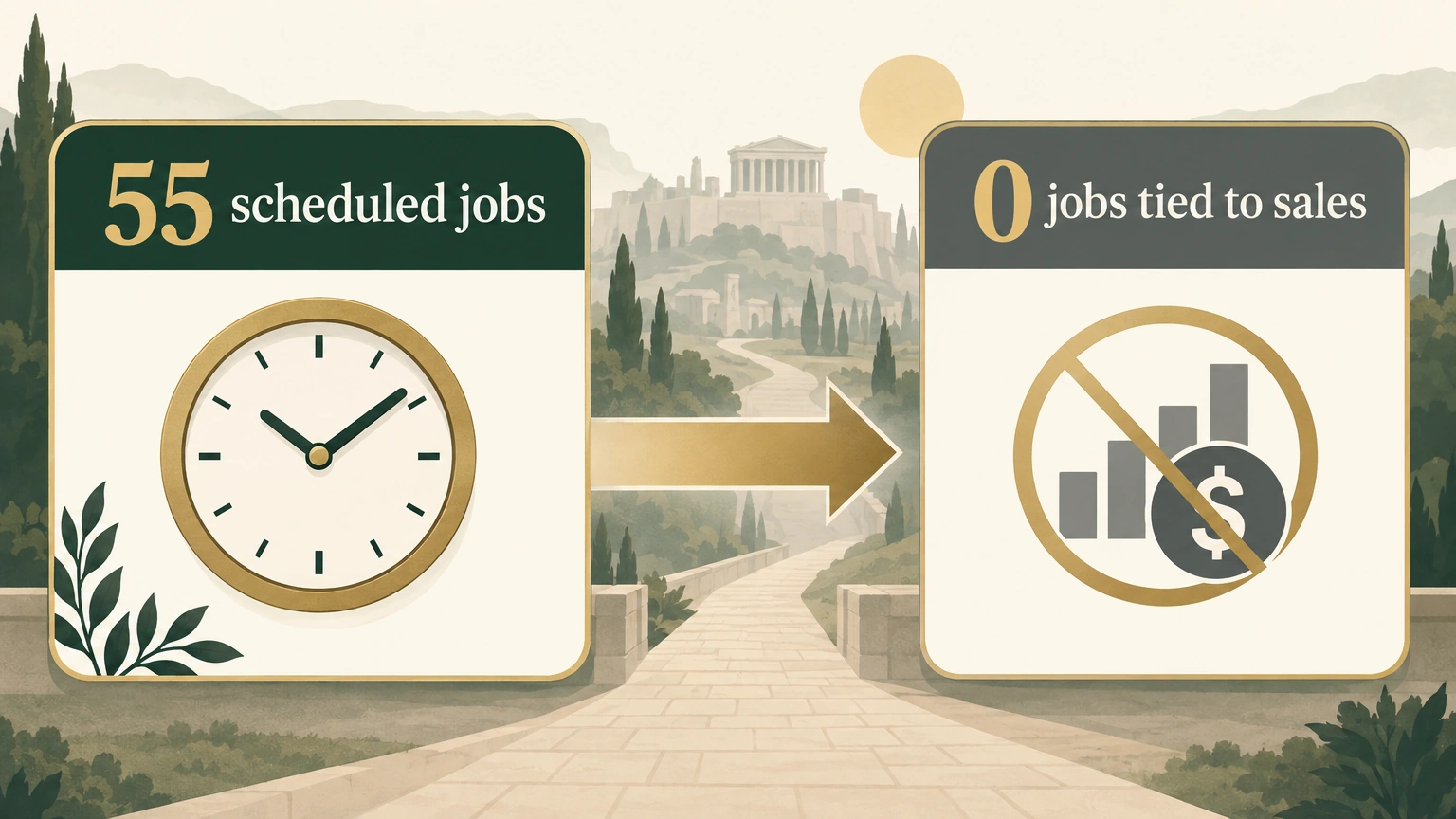
Historical audit finding: 55 scheduled jobs, zero aimed directly at conversion.
The second finding was harder to argue with
The machine was also producing a steady queue of things waiting for my review.
- More than 20 candidate insights had sat unread for four days.
- A folder for deeper retrospectives had existed for two weeks and contained 0 articles.
- The blog had not been updated for three weeks because I “didn’t know what to write.”
The machine’s output could keep growing. My review time was fixed. A faster conveyor belt only made a larger pile in front of the person who had to decide what mattered. The report put it bluntly: machines produced the output, but a human had to absorb it. The bottleneck was the human part.
I did not like that sentence, but I could not refute it. I had spent half a year adding automation to production. I had not spent a day deciding how I would process what it produced.
What I changed afterward
I made three subtractive changes.
- I added one automation task aimed at conversion. I started with session recordings in Clarity, Microsoft’s free website behavior-recording tool. It can replay a visitor’s clicks and scrolls. I watched 10 recordings to find where those 200 people got stuck, then focused on getting that one conversion path working.
- I bundled machine-generated candidates into one weekly Sunday review. Anything untouched for more than 30 days was archived automatically. An unreadable backlog has less value than no backlog.
- I stopped inventing blog topics from a blank page. The audit report itself contained 8 ready topics, each with historical numbers. This article was the first one.
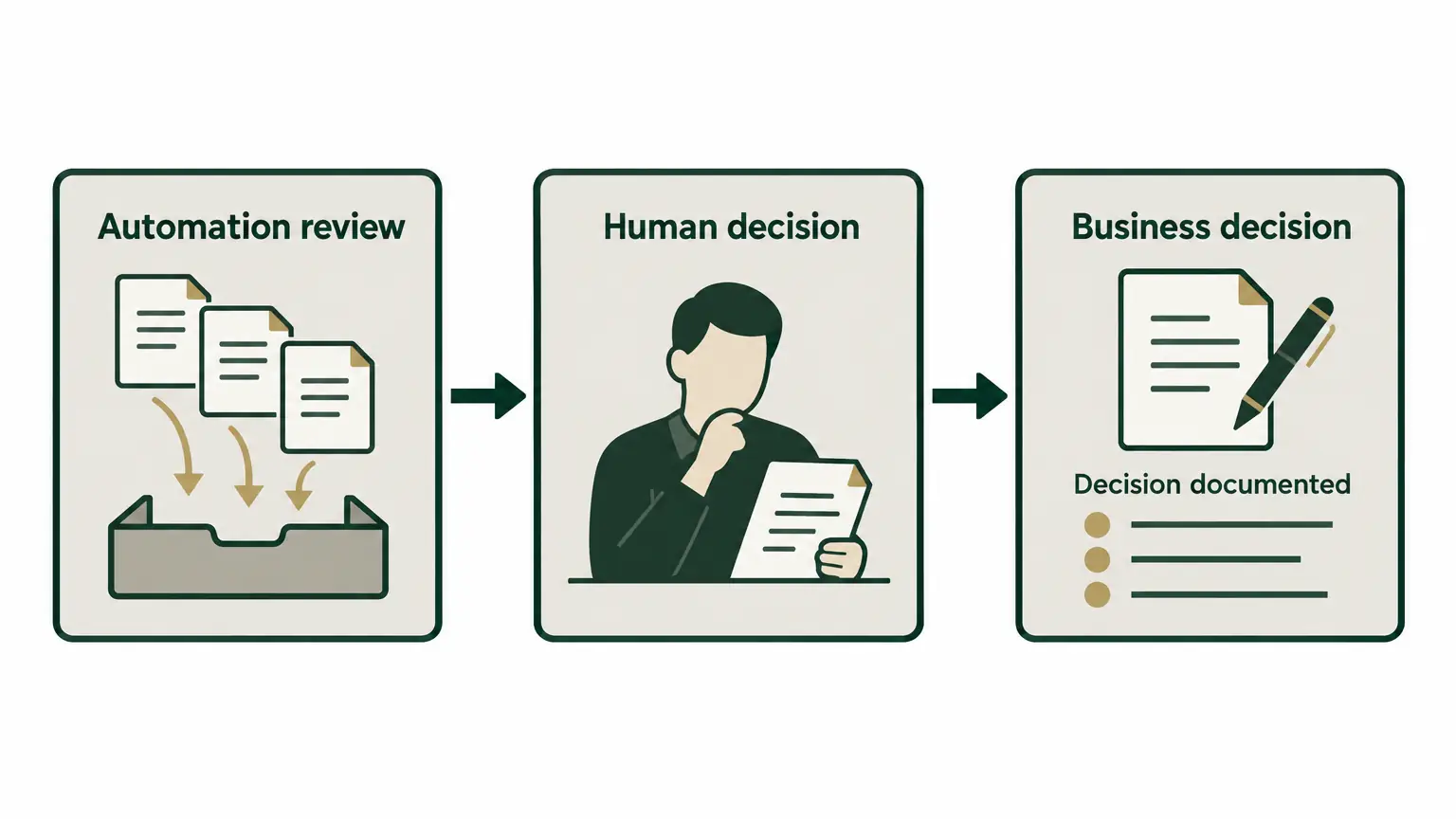
These were the actions I took after this historical audit, not a claim about current operations.
A five-minute check for your own automation
Open your scheduled-job list and count how many jobs point directly at a business result you need. For an independent store, that could mean finding why product viewers leave, validating a checkout path, or surfacing a customer question that blocks an order.
My answer that week was 0. That number told me more than a polished report did.
Automation does not choose its own direction. It accelerates whichever end of the work you keep feeding. I spent half a year feeding the output end, until that zero forced me to look at the conversion end.
One last detail: the nearly 10 GB folder turned out to be a virtual-machine image used by an AI desktop application. I almost deleted it as junk. I asked AI to check before deleting it and found that it was still in use. That was a smaller version of the same lesson: the more automation I add, the more I need a deliberate review step before an irreversible action.